Our Journey of Passion (1993-2023)
Introduction
The report of UWONET's two decades of work attempts to capture some of the network's struggles and its landmark achievements. UWONET's journey has been very eventful and a great learning experience. The network is indebted to its membership, allies in civil society, the Government of Uganda, and the development partners who have supported us – Sheila Kawamara Mishambi
Our Journey of Passion – Key Events
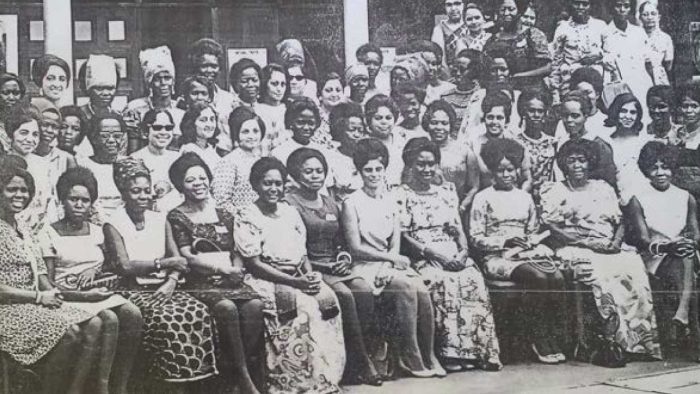
Inspiration for a Uganda Women’s Network As the women organised internationally for the Fourth United Nations World Conference on Women in Beijing, China, women from East Africa convened in Kampala from 5th to 8th July 1993, for the East African Women’s preparatory conference. During the…
Read MoreInspiration for a Uganda Women’s Network As the women organised internationally for the Fourth United Nations World Conference on Women in Beijing, China, women from East Africa convened in Kampala from 5th to 8th July 1993, for the East African Women’s preparatory conference.
During the conference women from different organisations showcased their work and shared experiences, bringing to light the need for joint action, continued networking and information sharing among women’s organisations. The conference addressed 12 critical issues to be debated in the Beijing Conference, including poverty; education; health; violence; armed conflict; the economy; power and decision–making; mechanisms for women’s advancement; women’s human rights; mass media; the environment; and, the girl child. These interrelated areas were all of high priority, requiring immediate attention from all stakeholders in civil society, government and the donor community.
To a great extent the creation of UWONET was stirred by the global women’s movement whose vibrancy and strength many women in Uganda encountered for the first time at the End of Women’s Decade UN Conference on Women (1985). The result of that conference saw the formation and revitalization of national chapters of a number of organizations.
The Nairobi conference had demonstrated that the real energy, innovation and drive for gender transformation and change came not from the official deliberations of governments, but from the women’s movement. In Nairobi, women had forced the UN open up space for civil society/non–governmental organizations to engage with the issues concerning women. Parallel sessions to those of governments and would enable them to make inputs into official deliberations.
This opening up of space at the global in official UN processes inspired Ugandan women because it became possible for us to mobilize and organize as autonomous women’s civil society organizations, and to engage and hold government accountable for the declarations and commitments made at the global level. UWONET’s identity as a gender activist and policy advocacy network was largely informed by this context and the opportunities it presented.
The idea of holding an East African Women’s Conference was first mooted at a meeting held at ACFODE, with the visiting Vice–President of the Women’s World Banking, Ms Mary Adhiambo hosted by the Women’s Finance and Credit Trust in 1990. With Ms Sarah Mangali an…
Read MoreThe idea of holding an East African Women’s Conference was first mooted at a meeting held at ACFODE, with the visiting Vice–President of the Women’s World Banking, Ms Mary Adhiambo hosted by the Women’s Finance and Credit Trust in 1990. With Ms Sarah Mangali an SNV technical advisor at UWFCT, Ms Odhiambo visited ACFODE
and held a meeting with Miria Matembe, the Chairperson, and Maude Mugisha, the Executive Secretary.
Ms Adhiambo pointed out that East African women would do better to organize as a region. She mentioned that in 1964, women in the region had converged in Limuru, Kenya to discuss women’s agenda in the post–Independence East
Africa. It was noted that since that time women in the region had not met again. The preparations for the UN Third World Conference held in Nairobi in 1985 happened when Uganda was in turmoil and not able to participate fully in the preparations or in the conference itself.
During the meeting, the SNV technical advisor working with UWFCT at the time promised to share the idea of an East African Women’s Conference with the SNV Director in Uganda. She wrote a loose minute and put it on a file at SNV but the idea was not followed up until 1992 when SNV employed a gender advisor, Ms Elizabeth Kharono. Internally SNV decided to take forward the idea of the East African Conference linking it to the 4th World Conference on Women scheduled to be held in Beijing in 1995.
Elizabeth Kharono worked as the gender advisor in SNV (Netherlands Development Organization), which was operating in partnership with NOVIB. On learning about the Beijing Conference (1995) SNV/ NOVIB agreed to play a role to add momentum to the process leading up to that conference. This…
Read MoreElizabeth Kharono worked as the gender advisor in SNV (Netherlands Development Organization), which was operating in partnership with NOVIB. On learning about the Beijing Conference (1995) SNV/ NOVIB agreed to play a role to add momentum to the process leading up to that conference. This was through different events leading up to the July 1993 East African Women’s Conference (EAWC), which was held in Uganda. An expected outcome of the conference was a framework for networking amongst women’s organizations in Uganda
UWONET was formed in 1993 almost a decade after the Nairobi Conference (1985) and as the United Nations prepared to host another global conference on women. With just two years to the 4th World Conference on Women (WCW), it was apparent that there was limited…
Read MoreUWONET was formed in 1993 almost a decade after the Nairobi Conference (1985) and as the United Nations prepared to host another global conference on women. With just two years to the 4th World Conference on Women (WCW), it was apparent that there was limited awareness amongst women’s organizations about the Nairobi Forward Looking Strategies (NFLS) as the agreed plan of action for addressing gender inequality worldwide. The fact that the Beijing
The conference would review the extent to which countries had acted on the NFLS provided an opportunity to create greater awareness about the strategies and mobilize women’s organizations to engage with the issues ahead of the Beijing Conference.
Events leading up to the East African Women’s Conference (EAWC) were designed as a process in which women’s organizations in Uganda, Kenya and Tanzania were mobilized to review the implementation of the NFLS and the status of gender equality within their contexts. The conference enabled women from the region to share experiences, connect and agree on steps to accelerate action on forward-looking strategies before the 4th World Women Conference (WCW).
Conference organizers brought together different women and women’s organizations to review and engage with the NFLS issues ahead of the 1995 Beijing conference. The process highlighted the hurdles women had to overcome to organize themselves. UWONET in Uganda and the Tanzania Gender Networking Program in Tanzania emerged out
of this process as a gender activist and policy advocacy network.
The Birth of UWONET:
In 1993, UWONET was formed as an advocacy platform to unite and amplify Ugandan women’s voices in addition to providing a space to address women’s concerns and their marginalisation within national policies, governance and development processes.
Vision and Mission:
UWONET was formed with a dream of creating “a Ugandan society free of all gender–based discrimination”. The network sought to coordinate action among its members through networking, capacity building, resource mobilization, policy research and advocacy for the attainment of gender equality. UWONET was also founded with an operational agenda, which combines human rights and democratic principles while targeting policymakers, decision-makers and implementers of laws and policies at different levels.
Thematic Focus of UWONET:
The members of UWONET sought to develop and promote a national women’s agenda influenced by the lived realities of women in Uganda. Twenty years after its formation, the network has remained committed to the mandate of ensuring that Ugandan women are recognised and their issues addressed in key areas at all times.
Discussions during the EAWC had centred on getting more women into positions of power, improving the legal and policy frameworks to address women’s concerns, eliminating all for of discrimination and violence against women, enhancing the economic status of women and ensuring that information about women is generated and shared with relevant stakeholders.
UWONET was therefore founded with an operational agenda, which combines human rights and democratic principles while targeting policymakers, decision-makers and implementers of laws and policies at different levels. During the past two decades, UWONET has targeted and worked with politicians (including the president, cabinet ministers, parliamentarians, and local government officials), heads of government departments, law enforcement structures (courts, prisons, police), local governments, religious leaders, cultural leaders and development partners.
The gender activism and policy advocacy work of UWONET centred around four areas of priority to Ugandan women’s development.
- Women in Governance
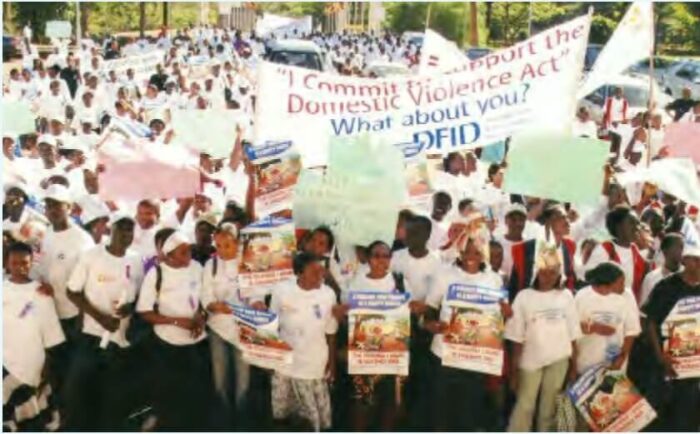
- Eliminating Violence Against Women
- Women and Peace Building
- Women’s Land Rights