Women councilors navigate a landscape shaped by deeply rooted patriarchal attitudes, rigid gender stereotypes, and cultural barriers that expose them to harassment, character assassination, and exclusion from decision-making spaces. These challenges are further compounded by unequal access to knowledge-building opportunities, limited orientation on council roles, overwhelming unpaid care responsibilities, and entrenched party-political biases factors that collectively restrict women’s ability to gain experience and exercise power.
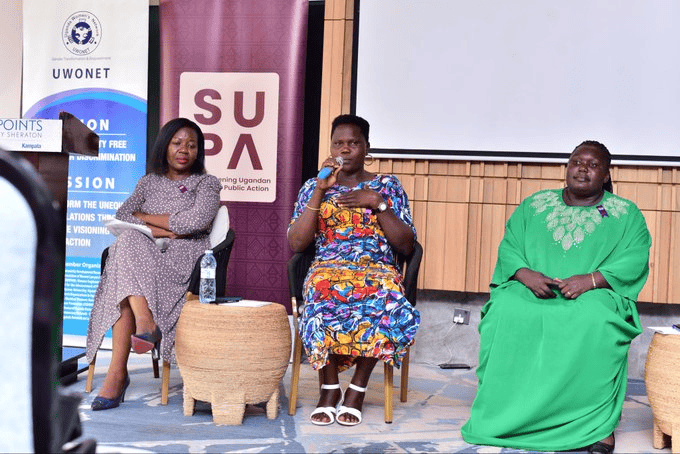
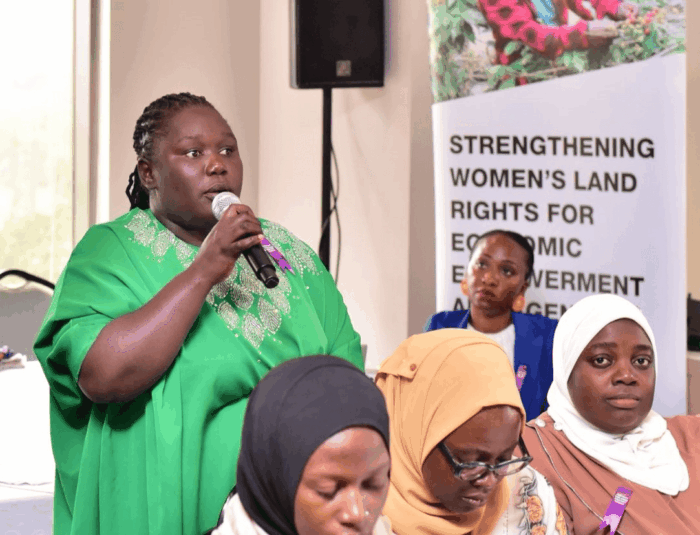
During the national women leaders’ summit organized by UWONET on 5 December 2025, Hon. Victoria Apili shared her leadership journey, an inspiring story that reflects the quiet yet profound transformation that becomes possible when women leaders are supported, trained, and equipped to lead with confidence.
Victoria spoke candidly about her early days in local government as a councillor in Kamuli. Despite holding the role of Women Chairperson for Gender, Labour, and Social Development, she often found herself unable to speak during council meetings. The space felt intimidating highly technical, male-dominated, and structured in ways that routinely drowned out women’s voices. It was an experience all too familiar to many women stepping into public leadership for the first time.
Her turning point came when UWONET conducted an induction training for women councillors in Kamuli. What made this intervention truly transformative was its practicality and accessibility. Complex governance processes were broken down into simple, relatable language, and the training addressed everyday but critical leadership council roles and responsibilities, appropriate dress code, and even seating etiquette in council chambers.
For the first time, Victoria felt grounded, prepared, and confident. And from that moment, everything changed. She stood up in council and spoke with clarity and conviction. “Other women followed my lead” she said. Their confidence grew, their self-esteem strengthened, established a women caucus and together they began identifying strategic entry points to influence decisions and advocate for improved service delivery.
Today, Victoria serves as the Deputy Speaker of the district council, a powerful testament to how intentional capacity-building can transform not only individual leadership journeys but entire governance landscapes. Before UWONET’s intervention, there were no women on any council committee. Now, empowered by the advocacy skills gained through the training, the women’s caucus has achieved remarkable milestones, including:
- Successfully advocating for the construction of four maternity wards
- Advancing food security initiatives
- Introducing food preservation skills to enhance community sustainability
- Passing a landmark by-law against child marriage
Victoria’s story is a compelling reminder that when women leaders receive targeted training and collective support, they do more than find their voices they reshape systems. Her journey demonstrates that empowering one woman can ignite change across an entire community https://www.danchurchaid.org/what-we-do/where-we-work/uganda