
Transforming Social Norms to Boost Women’s Enterprise Growth
In May 2025, Uganda Women’s Network (UWONET) conducted a Rapid Assessment on Facilitating Women Entrepreneurs Platforms on Shifting and Transforming Social Norms, Attitudes, and Practices among Women Entrepreneurs to Facilitate Enterprise Growth and Productivity under the GROW Project. The Generating Growth Opportunities and Productivity for Women Enterprises (GROW) Project is a Government of Uganda Project, funded by the World Bank, implemented by the Ministry of Gender, Labour and Social Development and the Private Sector Foundation Uganda in all districts, Municipalities and Cities. It aims at increasing access to Entrepreneurial Services that enable female Entrepreneurs to grow their Enterprises from micro to small and small to medium in targeted locations, including the Refugee host districts. UWONET is providing consultancy services to shifting and transforming social norms, attitudes, and practices among Women Entrepreneurs to Facilitate Enterprise Growth and Productivity.
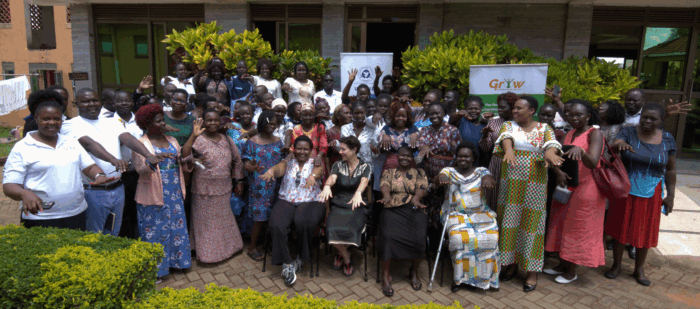
Following the assessment, UWONET organized validation meetings and review sessions across central and northern Uganda, reaching stakeholders from 69 districts. During these engagements, UWONET presented the Framework for Positive Social Norms, Attitudes, and Practices Change for Women Enterprises, developed under the project’s social norms component, for stakeholder review, input, and ownership.
The framework includes two key tools:
- A Male Involvement Strategy to promote positive change in social norms; and
- A Contextualized Referral Pathway for survivors of gender-based violence (GBV) within Women Entrepreneurs Platforms (WEPs).
Participants in the validation meetings included District GROW Focal Persons, District WEP Chairpersons, and representatives from Women’s Rights Organizations across the Karamoja sub-region and other districts. The framework aims to guide efforts toward shifting and transforming social norms, attitudes, and practices that limit women entrepreneurs, ultimately fostering an enabling environment for enterprise growth and productivity.
Key Discussions/Presentations

Deep-Rooted Social Norms Undermining Women Entrepreneurs’ Growth
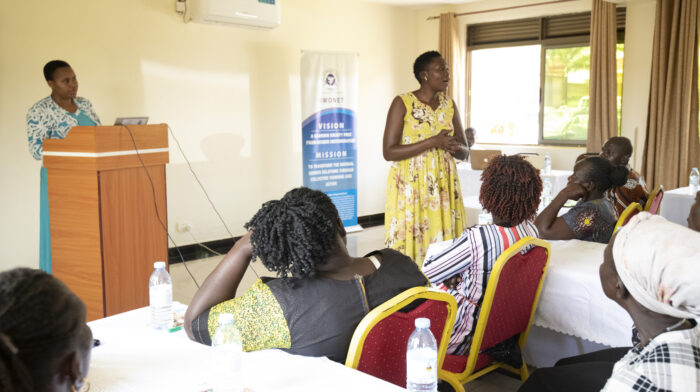
According to the discussions, negative social norms continue to hinder women entrepreneurs’ ability to thrive. Many women are expected to disclose and share their income with male partners or family elders, limiting their financial autonomy and reinvestment capacity. Cultural expectations that women remain close to home for caregiving duties restrict their mobility, networking, and time for business growth. Women’s enterprises are often dismissed as “side hustles,” undermining their recognition as serious economic ventures. Gender bias in financial systems further restricts access to credit, while social beliefs that married women must remain submissive erode their bargaining power and ambition, as success is seen as threatening to men’s authority. Additionally, women are socially confined to low-value sectors such as tailoring, food processing, and petty trade. The expectation for women to change their names after marriage also disrupts business identity and client trust, further illustrating how entrenched gender norms continue to constrain women’s economic empowerment.
Positive social norms affecting women entrepreneurs
Findings indicate that women entrepreneurs across Uganda continue to demonstrate remarkable resilience, adaptability, and leadership, driving business growth despite persistent gender barriers. The assessment reveals that 77% of women entrepreneurs possess sufficient knowledge to make informed business decisions, while 43% have personal collateral to access business loans. Their strength is complemented by exceptional communication and interpersonal skills that foster strong client relationships and effective teamwork. Most women embrace a collaborative leadership style, promoting inclusion and shared decision-making. Notably, 37% of respondents acknowledged consulting their spouses or male figureheads before making major business decisions, reflecting positive cultural values. Financial discipline also stands out as a positive norm, with 70% of women rejecting the idea of diverting business funds for non-business purposes. These traits i.e. resilience, discipline, and adaptability continue to shape a strong foundation for women’s entrepreneurial success in Uganda.
Tags: GROW, Roland Musasizi, social norms, Women's enterprise“In Acholi, there’s a common belief that women can’t engage in certain businesses like crafts or butchery. Many customers walk in asking for the boys to serve them, showing more trust in men than women. Such perceptions greatly challenge women-owned businesses. On top of that, women are expected to prioritize their marriages before anything else. They must prepare breakfast for their husbands and kids before leaving home, which delays opening their shops and makes it difficult to catch up with suppliers. They also have to close early to attend to family responsibilities.” – Owol Thomas